
GEASA: Upgrading Global Education Across Subject Areas
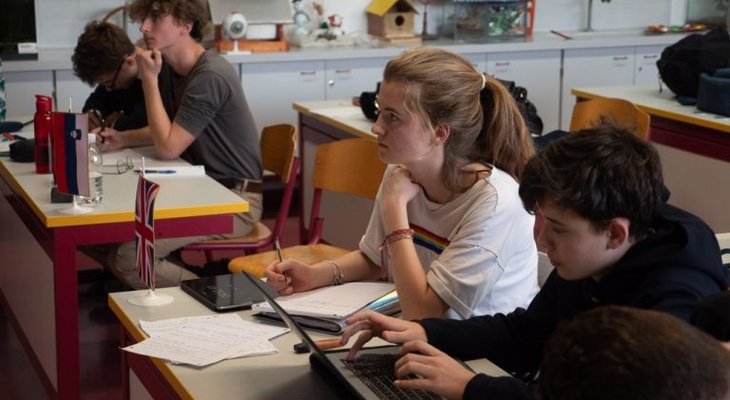
The Erasmus+ project Upgrading Global Education Across Subject Areas (GEASA) brings together ten partner organizations from five countries. Comprehensive education on contemporary global issues—emphasizing civic responsibility, or global education—is essential for developing the full democratic potential of society. Nevertheless, teachers often lack the support needed to integrate global education into curricula.
The aim of this project is to overcome these barriers and provide teachers with the knowledge and skills that will contribute to a more comprehensive and practical implementation of global education within European education systems. One of the approaches used to teach global education is based on debate methodology—a set of interactive methods that, among other things, help students improve critical thinking and information literacy skills.
The partners developed a handbook for teachers, a methodological handbook with curricula and exercises, collections of case studies for students and teachers, and online platforms intended for individual learning. The results included content related to globalization, inequality, sustainable development, climate, global health, identity, and culture.
In 2022, two partner meetings and an international training event took place, all in Slovenia. The project coordinator is Rok Hafner, Ivan Koruza is responsible for administrative and organizational matters, and the texts were written by Rok Hafner and Gorazd Jurman.
More information about the project is available at:
https://geasa-project.eu/
Partners
Project Coordinator: Za in Proti, Institute for the Culture of Dialogue (Slovenia)
Gimnazija Litija (Slovenia)
Institute of African Studies (Slovenia)
University of Ljubljana (Slovenia)
Associazione Società Nazionale Debate Italia (Italy)
Università Telematica degli Studi IUL (Italy)
Liceo Scientifico Statale Galileo Galilei (Italy)
International Debate Education Association (Netherlands)
Learning Wizards (Croatia)
Asociace debatních klubů (Czech Republic)
This project is co-funded by the European Union.
The text reflects the views of the author only. The European Commission is not responsible for any use that may be made of the information contained herein.


 Back to project archive